

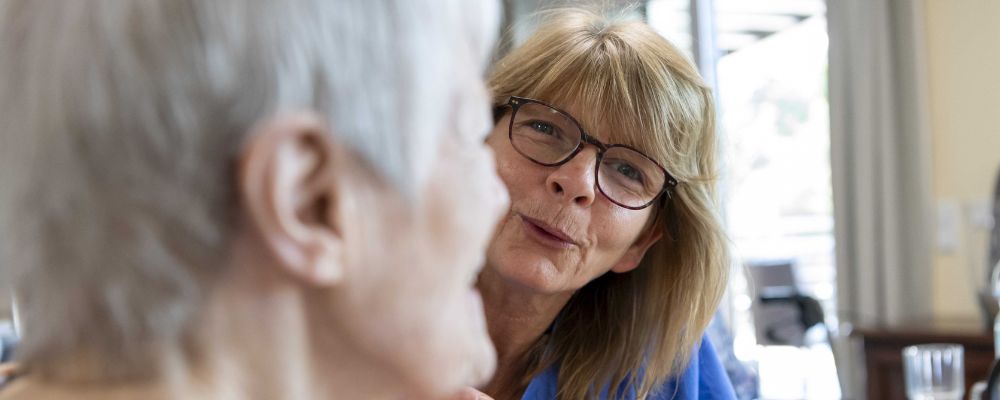
Self-determination becomes more difficult when a father or mother loses strength in a nursing home. Relatives and caregivers are then increasingly required to explore the wishes and will of residents – and to respect them. Gisela Weingart, quality officer of the Großheppach Nursing Association, who works in a 67-bed nursing home with an affiliated nursing school in Weinstadt, and Cilia Benedikt-Straub, consultant for advance healthcare planning, provide tips on how to interact with residents.
Food and drink
Respect it if an older woman does not want to eat—even if she loses weight. However, possible causes such as illness, dental status, preferred foods, or snacks should first be clarified. There can be many reasons: lack of appetite, loss of taste, and so on. The same applies to drinking. And because a nursing home is not an alcohol-free zone, it is worth checking whether the resident simply does not want water or tea but may enjoy juice, a glass of wine, or beer. This should also be possible in the dining room, as the needs of older people always take priority.
Biographical information is valuable – for example, whether someone liked to drink cider, wants cream in their coffee, or has always drunk very little. Even small details can make a difference. The medical consequences of insufficient food or fluid intake are always discussed with the resident, their relatives, and the family doctor. Expert Cilia Benedikt-Straub says: “We also accept it if, after thorough counseling, someone understands not drinking as part of their personal decline process.”
Self-determination in personal care and hygiene
Biographical research also helps in this area: which care products and brands did someone use? What are their individual expectations regarding hygiene and personal care? A high level of tolerance from staff is required here, intervening only when there are signs of neglect or obsessive cleanliness. Gisela Weingart notes: “The generation of daily showering is gradually arriving in our facilities.” Contractually, residents are entitled to assistance with showering twice a week.
It goes without saying that “well-groomed women can also go to the hairdresser weekly or have one come to them.” The same applies to wearing different jewelry every day, the intensity of perfume, or nail care. It is also important to respect if residents only want to be washed by someone of the same gender. In-depth discussions become necessary if someone absolutely refuses to change or wash their clothes, especially underwear.
Costs and expectations
As nursing home places have become very expensive, residents sometimes derive certain demands or expectations toward staff from this or refer to their relatives: “But my son said you have to do this!” In such cases, the experts recommend explaining how the costs are composed of accommodation, meals, and care, and that staff do not personally benefit. Cilia Benedikt-Straub explains: “It is often helpful to discuss costs and expectations with relatives, who can then ideally mediate rather than escalate.”
After all, services – from maintenance and cleaning to laundry and cooking—are provided by professionals who need their salaries to support their families. In this context, it is also helpful to point out the many available activities, such as cooking together, exercise, singing or crafts sessions, yoga groups, and outings.
Self-determination – an appeal to relatives
To preserve the self-determination of older people, relatives also need to be sensitized. Because nursing home care is expensive, children often pressure their parents: “Mom, you have to take part!” Such demands can amount to disempowerment. Perhaps the elderly mother simply wants to sit and watch or listen. Weingart says: “That is completely fine, as fatigue increases with age.” She often hears older women say they have done enough cleaning, cooking, and working in their lives and now simply want to rest.
This example shows how important it is for staff to observe and listen carefully. For this reason, the Großheppach Nursing Association conducts regular care visits that focus precisely on this: does the group activity still suit the individual in terms of content, duration, noise level, accessibility, or level of participation? Adjustments can then be made if necessary.
Read part 2 of this service article on the autonomy of nursing home residents in the next issue, when topics such as sexuality, dying, and relatives will be addressed.