

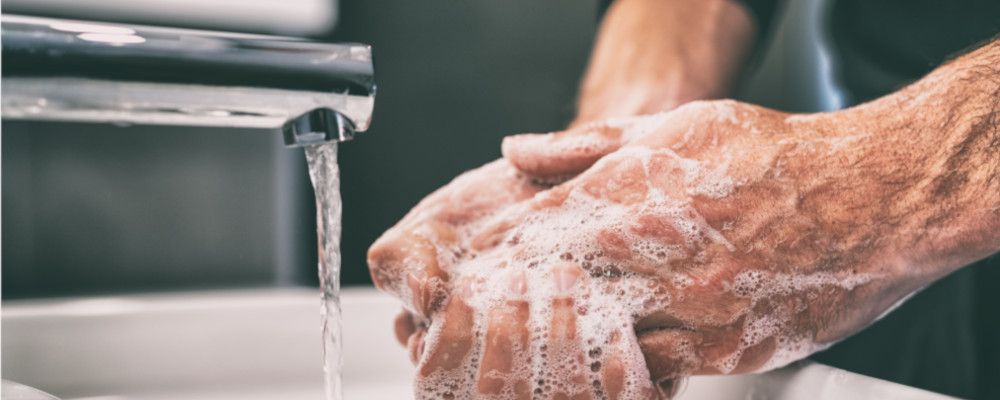
How visitors to nursing homes can be engaged in hygiene measures.
When relatives visit a nursing home, it is often the highlight of the day—if not the week—for older residents. Especially during cold and flu season, however, this also increases the risk: viruses, germs, unintentional carelessness. What is natural for relatives and residents alike—a hug, using the bathroom in the room, everyday touches—can pose a danger for older people.
Often the immune system is no longer able to cope with such strains because several illnesses burden the body at the same time. Care staff live with this balancing act between closeness and protection. “We cannot and do not want to isolate people; we want to make visits possible,” says Frauke Bauer, ward manager at the Asklepia Senior Center in Notzingen, Württemberg, with 45 beds across three open living areas. “But hygiene is care.”
Hygiene means responsibility for everyone
Relatives are part of daily life in nursing care—and therefore part of the hygiene concept. They bring closeness, joy, conversation—everything that is not always possible in everyday routines. At the same time, they also bring the outside world with them: jackets, bags, mobile phones, and sometimes infections. “Hygiene is the be-all and end-all,” says Frauke Bauer. “Many underestimate how much they touch in a nursing home!” That’s why hygiene concepts need not only staff in care and cleaning, but a sense of community. Residents live here; it is their center of life. Their freedom and self-determination are important—just as important as their safety. Both must be rebalanced every day.
Six measures for better hygiene
Relatives can do a lot to ensure their visit is an act of care:
- Disinfect hands – upon arrival, before contact, after using the toilet, and when leaving the facility
- Pay attention to notices and read instructions – they contain valuable tips for a safe visit
- Stay at home when ill – or wear a mask
- Observe cough and sneeze etiquette – viruses spread very quickly
- Disinfect surfaces before and after using the toilet – cleanliness is crucial
- Ask care staff and follow agreements – before helping out
How education makes a difference
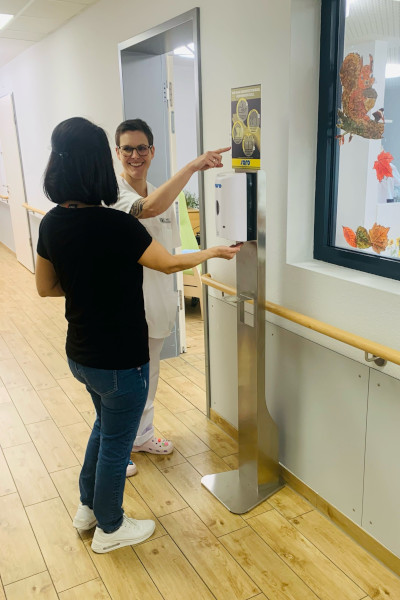
Hygiene in nursing homes works when everyone is included—relatives too. Once it is clear why the rules matter and how each person can contribute, the way people interact changes. That’s why care facilities like Asklepia rely on clear, friendly communication. A hand sanitizer stand is prominently placed at the entrance, with a clear request to disinfect hands upon entry. Throughout the building, easy-to-understand notices remind visitors to clean surfaces after using the toilet and to disinfect hands after shared contact points. Short sentences, clear symbols—as understandable as possible. “No one does anything wrong on purpose,” says Frauke Bauer. “Many underestimate the impact their behavior can have on older people.”
What care staff need
Hygiene takes time and attention—both are often scarce in everyday care. Visitors usually focus on the one person they love. Care staff must think about an entire group of older people at the same time, assess risks, respond appropriately, and still allow closeness. Understanding helps. A brief reminder is not criticism—it creates safety. Questions are a good sign: it’s about protecting everyone’s health. “In a nursing home, it’s about other people’s health—you have to put your ego aside,” says the ward manager. “We want to maintain the residents’ quality of life.”
How Hygiene works at Asklepia
Good hygiene comes from good cooperation, not pressure. Relatives are greeted warmly. Instructions are explained, not just posted. And care staff do their best to answer questions. This approach works. Trust grows and conflicts decrease. Hygiene is a shared responsibility. The result is protection without anyone feeling restricted. Closeness without unnecessary risks. In short, an environment where people feel safe and welcome.
Staying attentive
Hygiene is important—and it is a sign of respect. For the people who live in the home, for those who care for them, and for everyone who visits. When relatives stay attentive together with care staff, it protects everyone’s health and helps turn the nursing home into a true home.